Green tea extract basics
Green tea (Camellia sinensis) is one of the most consumed beverages globally and one of the most studied plants in the human health literature. Green Tea Leaf Extract (GTLE) concentrates the bioactive compounds from the leaf — particularly the catechin polyphenols and caffeine — into a standardised form with defined and consistent potency. The primary active catechin in Green Tea Extract is EGCG (epigallocatechin gallate), which typically constitutes 50-60% of the total catechin content in a standardised extract.
What distinguishes Green Tea Extract from consuming green tea as a beverage is dose concentration and consistency. A standardised extract delivering 200-400mg of EGCG is the equivalent of drinking 4-8 cups of green tea simultaneously — providing a therapeutically relevant dose that beverage consumption alone rarely achieves in practice. This concentration is what the clinical research on Green Tea Extract’s thermogenic effects is based on.
EGCG and COMT inhibition
Green Tea Extract’s primary thermogenic mechanism operates through an enzyme called COMT (catechol-O-methyltransferase). COMT is responsible for breaking down catecholamines — particularly noradrenaline, the neurotransmitter that signals fat cells to release stored fatty acids and increases thermogenesis (heat production and calorie burning). Under normal conditions, COMT rapidly degrades noradrenaline, limiting the duration and intensity of its thermogenic signal.
EGCG inhibits COMT activity, effectively prolonging the lifespan of noradrenaline in the system. This sustained noradrenaline signal increases the rate of fatty acid mobilisation from adipose tissue and raises total energy expenditure. The caffeine in Green Tea Extract amplifies this effect through a complementary pathway — it inhibits phosphodiesterase, increasing cyclic AMP (cAMP) concentrations that further enhance noradrenaline sensitivity. EGCG and caffeine together produce a greater thermogenic effect than either compound alone, which is the mechanistic basis for why standardised Green Tea Extracts outperform caffeine-alone products in head-to-head thermogenic research.
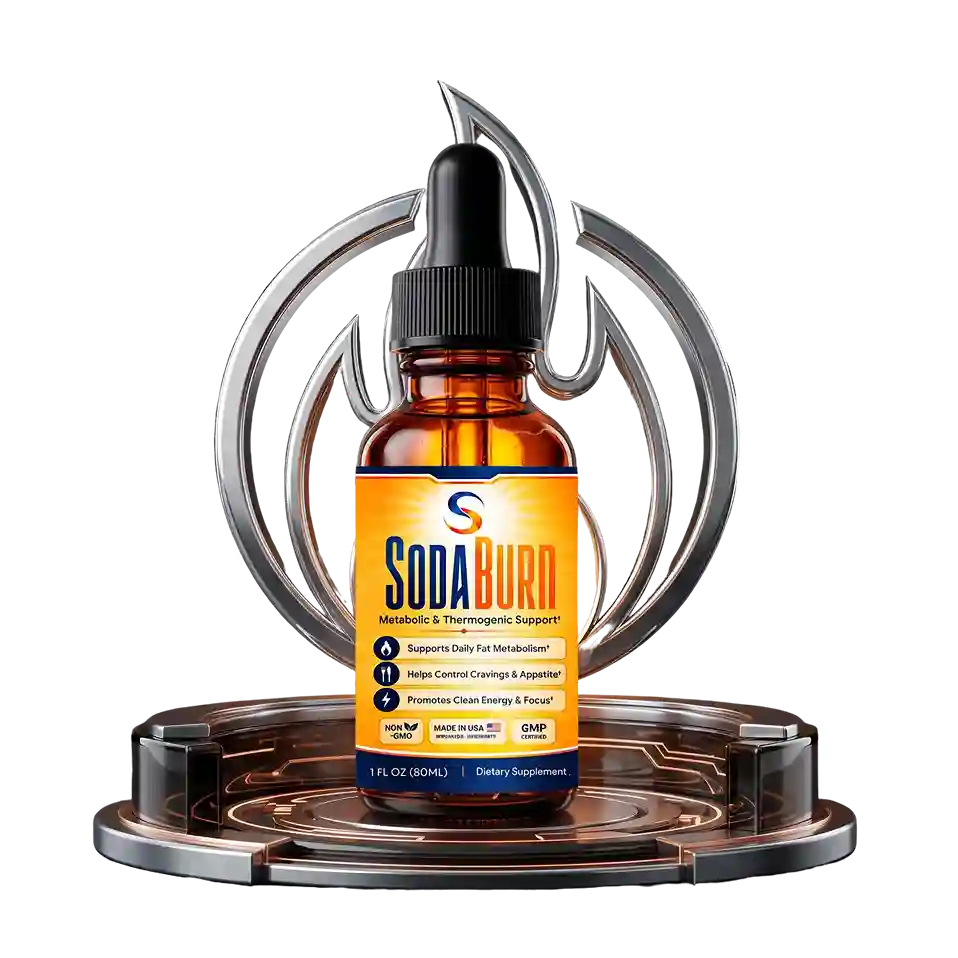
View the SodaBurn botanical formula and current pricing.
🌿 View SodaBurnClinical evidence for thermogenesis
Multiple randomised controlled trials and meta-analyses have confirmed Green Tea Extract’s thermogenic effects. A widely cited study published in the American Journal of Clinical Nutrition found that Green Tea Extract increased 24-hour energy expenditure by 4% compared to placebo — equivalent to approximately 80-100 additional calories burned per day without any change in activity level. A larger meta-analysis of 11 randomised trials confirmed statistically significant increases in resting energy expenditure with Green Tea Extract supplementation, with greater effects observed when caffeine intake from other sources was controlled.
Body composition data from longer-term Green Tea Extract trials shows consistent modest reductions in total fat mass, with particularly notable reductions in abdominal fat. The abdominal specificity is consistent with EGCG’s role in increasing abdominal adipocyte (fat cell) lipolysis through beta-adrenergic receptor stimulation in visceral fat tissue.
Fat oxidation during exercise
Green Tea Extract’s effects on fat oxidation are amplified during physical activity. A study published in the Journal of Nutrition found that subjects supplementing with Green Tea Extract demonstrated 17% greater fat oxidation during moderate-intensity exercise compared to placebo — with no difference in carbohydrate oxidation rate. This selective enhancement of fat as fuel during exercise is particularly valuable for anyone engaging in regular physical activity alongside dietary changes.
The practical implication is that taking SodaBurn before morning exercise (even a moderate 30-minute walk) creates conditions for significantly enhanced fat oxidation during that activity compared to exercising without Green Tea Extract support. The Green Tea and Guarana combination in SodaBurn further amplifies this through the complementary caffeine pathway of Guarana’s slow-release caffeine.
Green tea in SodaBurn
Green Tea Leaf Extract is one of two thermogenic actives in the SodaBurn formula (alongside Guarana Seed Extract), providing the EGCG-mediated COMT inhibition mechanism that underpins the formula’s calorie-burning support. Paired with Guarana’s slow-release caffeine — which provides sustained sympathetic activation through a different pathway — the combination creates a multi-mechanism thermogenic system more comprehensive than either ingredient alone. The remaining four SodaBurn ingredients (Chromium, African Mango, Maca Root, Grape Seed) extend the formula’s support into appetite regulation, blood sugar management, cortisol control, and antioxidant protection — dimensions that thermogenic ingredients alone do not address.
More articles
More on the SodaBurn blog. Official site for pricing.